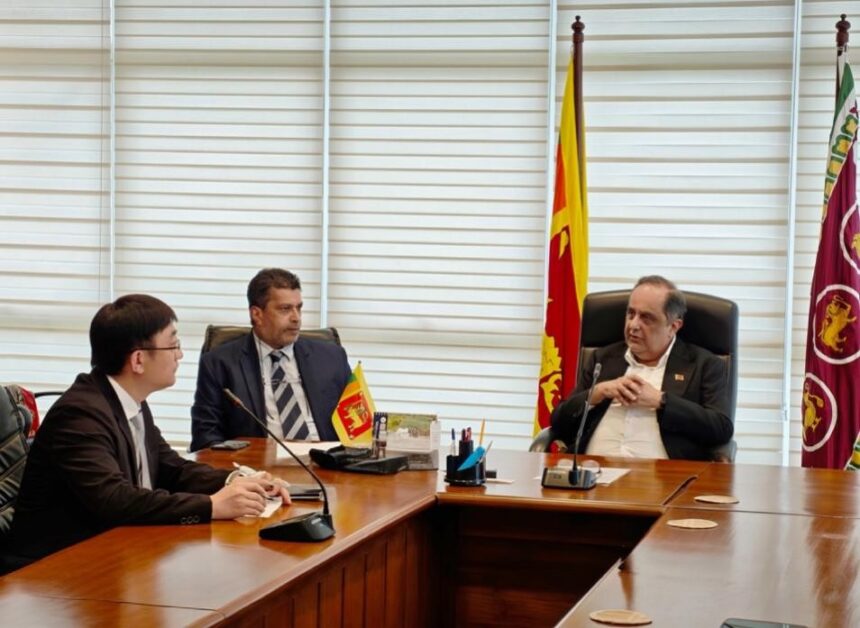
A delegation led by Prof. Wang Weijia, Director of the Research Centre for Global Governance and International Communication at the Institute of Area Studies and Dean of the Institute of International Communication at Peking University, China, conducted a series of high-level research interviews in Colombo recently.
During their visit, the delegation met with several government and state sector representatives, members of legal fraternity, members of the armed forces and experts from leading international affairs think tanks, engaging in wide-ranging discussions on Sri Lanka-China cooperation.
Trade and Investment as Key Growth Drivers
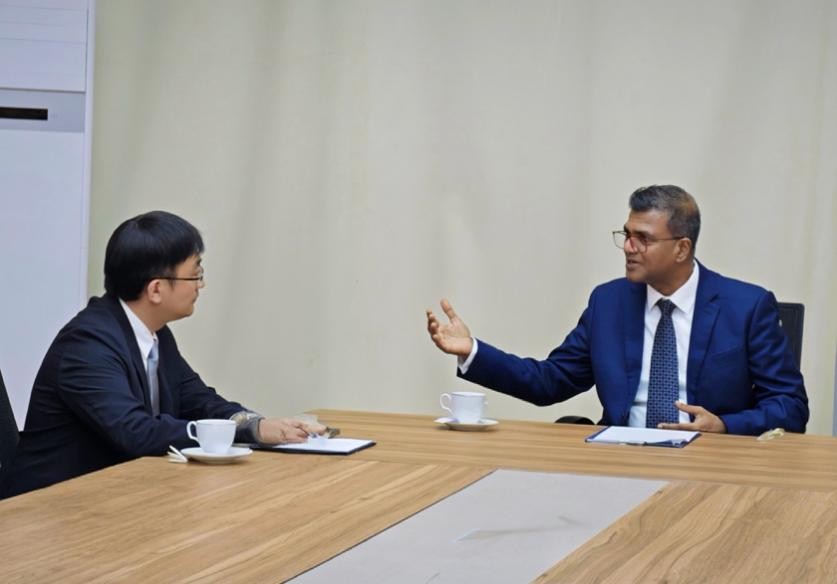
At a meeting with H.E. Hanif Yusoof, Presidential Special Envoy on Foreign Investments and Governor of the Western Province, the delegation engaged in in-depth discussions on Sri Lanka’s international trade and investment landscape. Governor Yusoof noted that international trade and foreign direct investment are critical to Sri Lanka’s future economic growth, with logistics, energy, and tourism identified as priority sectors for attracting foreign capital.
He further highlighted the longstanding involvement of Chinese enterprises in Sri Lanka’s infrastructure, energy, road, and telecommunications sectors, noting their significant contribution to the country’s economic development. Looking ahead, he stressed that Sri Lanka should leverage its strategic geographic position to build regional supply chain networks and deepen cooperation with Chinese enterprises in export-oriented manufacturing.
A Relationship “Beyond Commercial”
Speaking with Dr. Harshana Suriyapperuma, Secretary to the Treasury and Ministry of Finance, Planning and Economic Development, the delegation explored various dimensions of the Sri Lanka-China relationship. Dr. Suriyapperuma emphasized that the two countries are bound by longstanding historical, cultural and sentimental ties that extend well “beyond commercial and transactions”.
In this context, he highlighted Port City Colombo as a symbol of the enduring partnership between Sri Lanka and China, and described the project as an important platform with the potential to contribute to Sri Lanka’s long-term economic growth and international connectivity.
Exploring New Models of Cooperation
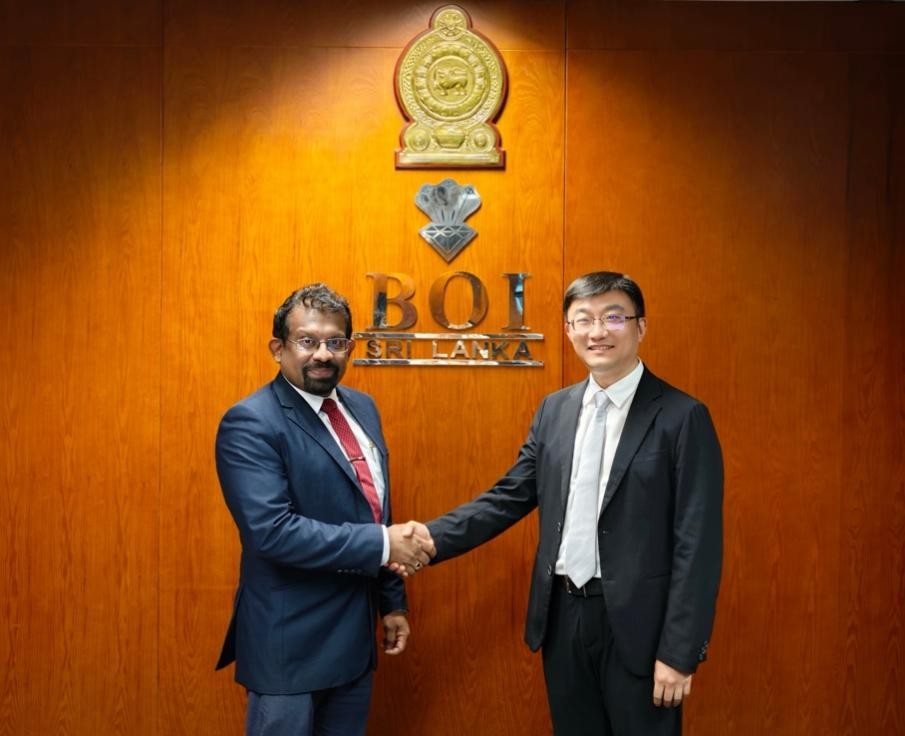
Dr. Jayawardena noted that foreign direct investment (FDI) projects such as Port City Colombo generate both direct and indirect economic benefits, including foreign capital inflows, employment opportunities for local citizens, and technology transfer. Beyond infrastructure development, he noted that high-tech manufacturing, pharmaceuticals, and textiles should serve as key areas for deeper Sri Lanka-China cooperation.
Looking ahead, he hopes to leverage academic and think-tank institutions such as Peking University to create more platforms for mutual exchange and collaboration. In particular, he highlighted the value of learning from China’s experience in special economic zone governance, manufacturing development, and workforce training, with a view to exploring new avenues for deeper bilateral cooperation.
Throughout the visit, Prof. Wang introduced Peking University’s academic strengths in area studies and international communication to the officials and experts engaged during the delegation’s meetings. He also expressed the university’s commitment to conducting further research aligned with Sri Lanka’s development priorities, while fostering scholarly and cultural exchanges that strengthen mutual understanding and serve as a bridge between the two countries.
–ENDS—
Image Caption
Interview with Governor of the Western Province of Sri Lanka
About Peking University
Founded in 1898, Peking University is one of China’s most prestigious comprehensive universities. In the latest QS World University Rankings 2026, it is ranked 14th globally, 2nd in Asia, and 1st in China.
The Institute of Area Studies at Peking University, founded in 2018, serves as a premier interdisciplinary hub for global research and talent development in China. Drawing on the university’s extensive expertise across history, politics, economics, languages, law, and communication, the Institute analyses complex regional and global dynamics. Rejecting conventional silos, the Institute is committed to “understanding the world” through multi-dimensional, field-based inquiry. It aims to build a comprehensive knowledge system that bridges academic rigour with real-world impact, cultivating the next generation of scholars and practitioners in international affairs.
The Institute of International Communication at Peking University, established in 2014, is a preeminent research institute in the fields of international communication and public diplomacy. The institute focuses on intergovernmental and grassroots public diplomacy, as well as internet governance and media policy. Renowned for its academic rigour and practical insights, it provides informed advisory support to relevant government departments and delivers tailored business intelligence to Chinese enterprises operating globally.
Press Contact
Yubing Chen
Associate Research Fellow
Institute of International Communication at Peking University